Explore Ennal’s Pool Woodland & lakeside activities
Twenty things to do outdoors. Look, listen, make, explore. These are twenty simple ways to get more from a wander around the lake and woodland - equally good for children, families and grown-ups who have not lost the habit of looking closely.
Pick one for ten quiet minutes, choose a few at random or work your way through the whole collection over several visits. There is nothing to complete and no right answer - the point is simply to notice more of the place around you.
Find an activity A good place to begin: look closely at a tree. Before you begin Use the paths and areas your host has shown you. The lake is deep with steep banks: keep children close and choose activity spots well back from the water. Leave wildlife, nests, plants and old structures undisturbed. Use only a few loose fallen materials and put them back. No tasting plants, fires, tools or water entry is needed for these activities.
Choose your mood All 20 Watch Listen Explore Make
Print activities 20 activities
01 / Listen 5-10 minutes
A sound map All ages
Bring: Paper and pencil, or just listen.
Choose a comfortable spot on an open path, away from the water’s edge. Mark yourself in the middle of a page. Listen quietly, then mark where each sound comes from: a bird, rustling leaves, footsteps or water. Compare maps. Which sounds did you both notice? Take it further Return to the same place later and look for a change in the soundscape.
02 / Watch 10 minutes
The ten-minute bird watch All ages
Bring: Optional binoculars and the sightings checklist.
Choose a place where you can watch without approaching birds or their nests. Stay still for ten minutes. Note each species, what it is doing and the highest number you see together. Add your observations to the wildlife checklist. Take it further Separate birds seen from birds identified by call and record the time.
03 / Explore 10-15 minutes
Meet a tree All ages
Bring: Nothing.
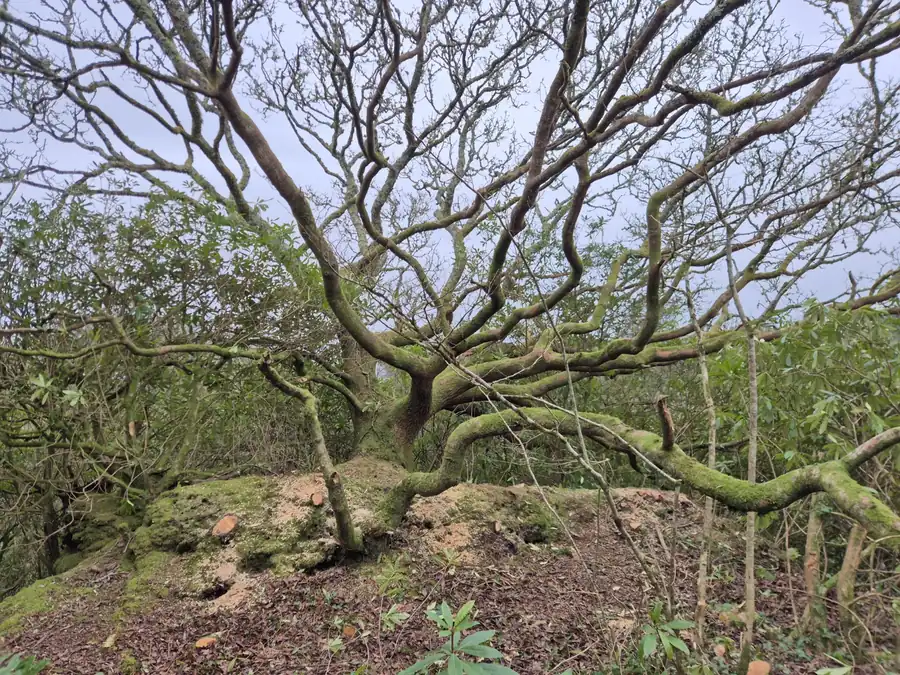
Choose a tree beside a path. Look at the bark, the branching shape and any leaves you can see. Describe three features without naming the tree. Ask someone else to find it from your description. Look for seedlings nearby and compare their leaves. Take it further Identify the tree using several features, rather than one leaf alone.
04 / Explore 10 minutes
A woodland colour hunt All ages
Bring: Optional camera.
Choose five colours before you start. Find each one in the woodland without picking anything: bark, leaves, flowers, sky or an insect. Compare the most surprising finds. Take it further Find five different greens and describe how light changes them.
05 / Explore 15 minutes
Leaf detectives Ages 5+ with an adult
Bring: A few fallen leaves and paper.
Find a small selection of fallen leaves on the path. Leave living plants untouched. Sort them by edges, shape and vein pattern. Try a different sorting rule. Match a leaf to a nearby tree and put the leaves back afterwards. Take it further Make a simple identification key: rounded or pointed, smooth or toothed, single or divided.
06 / Make 15-20 minutes
Bark and leaf textures All ages
Bring: Paper and wax crayons.
Place paper over a fallen leaf and rub gently with the side of a crayon. Compare its veins with another leaf. For bark, use a robust trunk beside the path and avoid moss or lichen. Label each pattern or turn the rubbings into a picture. Take it further Identify your examples and compare leaf structure between species.
07 / Make 20 minutes
A tiny woodland landscape All ages
Bring: A handful of loose fallen leaves and small twigs.
Choose bare ground away from paths, plants and the lake edge. Arrange a miniature landscape using a few loose materials. Leave logs and established deadwood habitats in place. Tell the story of the creature that might live there, then scatter your materials back. Take it further Design places for shelter, food and movement through your imaginary habitat.
08 / Make 15-20 minutes
Patterns on the ground All ages
Bring: A few loose fallen natural materials.
Make a spiral, repeating pattern or symmetrical shape on clear ground. Invite someone to continue it using the same rule. Photograph it if you like, then return the materials and leave the path clear. Take it further Use a pattern that changes gradually in size, colour or spacing.
09 / Watch 15 minutes
One square of woodland Ages 5+ with an adult
Bring: A notebook; optional magnifier.
Choose a small patch visible from a path, roughly a square metre. Do not clear or disturb it. Spend five minutes looking for different plants, textures and moving creatures. Sketch what you see and compare it with a second patch. Take it further Explain how light, shelter or moisture might account for the differences.
10 / Watch 15 minutes
Minibeast watch All ages
Bring: Optional magnifier.
Look at leaf surfaces, bark and the ground from a path. Leave creatures and their shelters in place. Follow one small creature with your eyes for a minute. Count legs if you can see them. Describe how it moves and what it appears to be doing. Take it further Try identifying its group before its species: beetle, spider, fly or something else.
11 / Explore 15-20 minutes
Tracks and clues Ages 5+ with an adult
Bring: Camera or notebook.
Look along an existing path for footprints, nibbled seeds or feeding marks. Photograph or sketch clues without touching droppings or disturbing burrows. Discuss which animals might have left them and what would help you decide. Take it further Include a scale beside a footprint without touching it and record the ground conditions.
12 / Watch 10-15 minutes
Dragonfly patrol All ages
Bring: Optional binoculars.
Stay on a firm permitted path well back from the lake edge. Watch for insects returning to the same perch or following the same stretch of water. Notice colour, flight style and how the wings are held when resting. Take it further Photograph from a distance and try to identify the species afterwards.
13 / Watch 10 minutes
Reflections and ripples All ages
Bring: Nothing; optional sketchbook.
From a safe viewpoint, find a reflection of a tree or the sky. Watch what happens when wind, a bird or a fish disturbs the surface. Do not throw anything in. Draw or describe the changing shapes. Take it further Compare a sheltered view with an exposed one without leaving permitted paths.
14 / Listen 5 minutes
A quiet five minutes All ages
Bring: Nothing.
Choose a comfortable, safe place to sit or stand. Notice three things you can see, three sounds and how the air feels. Keep your eyes open if you prefer. Stay a little longer and see what you notice after the first rush of looking. Take it further Repeat alone or together and compare what drew your attention.
15 / Make 15-20 minutes
Woodland story circle All ages
Bring: Nothing.
Each person chooses something they can see: a tree, a bird, a leaf or a cloud. One person starts a story and each person adds a sentence including their chosen thing. Give the story an ending and a title. Take it further Tell it again from the viewpoint of a different woodland inhabitant.
16 / Make 10-15 minutes
A poem from the path Ages 5+ with an adult
Bring: Optional paper and pencil.
Collect words rather than objects: a colour, a movement, a texture and a sound. Turn them into three short lines. There is no need to rhyme. Read them aloud or keep them as a memory of your visit. Take it further Write a second version without using the words tree, lake, bird or green.
17 / Explore 20 minutes
A map made from memory Ages 7+ with an adult
Bring: Paper and pencil.
Walk a short permitted route together, noticing landmarks and turns. At the end, draw the route from memory. Include places where you noticed wildlife. Compare maps, then retrace the route together to check. Take it further Add a key and estimate relative distances. Your sketch is a record, not a navigation aid.
18 / Watch 10 minutes
A photograph to return to All ages
Bring: Camera or phone.
Choose a viewpoint on an existing path, well back from the bank. Photograph a tree, a patch of woodland or a lake view and note where you stood. Return on another visit and frame the same photograph. Take it further Compare leaf cover, light and water level across the seasons.
19 / Explore 15-20 minutes
Signs of the season All ages
Bring: Notebook or camera.
Find three signs of the current season: buds, flowers, fallen leaves or bird behaviour. Record the date and weather with a sketch or photograph. Look for something that surprises you for the time of year. Take it further Choose one tree to follow through several visits and build a dated record.
20 / Explore 15 minutes
The habitat connections game Ages 5+ with an adult
Bring: Paper and pencil, or conversation.
Choose three things you can see: perhaps a tree, an insect and a bird. Discuss how each finds food, shelter or somewhere to grow. Draw possible connections. Add water, soil and sunlight to your picture. Take it further Separate connections you actually observed from ones you would like to investigate.