From the Tamar to Saltash
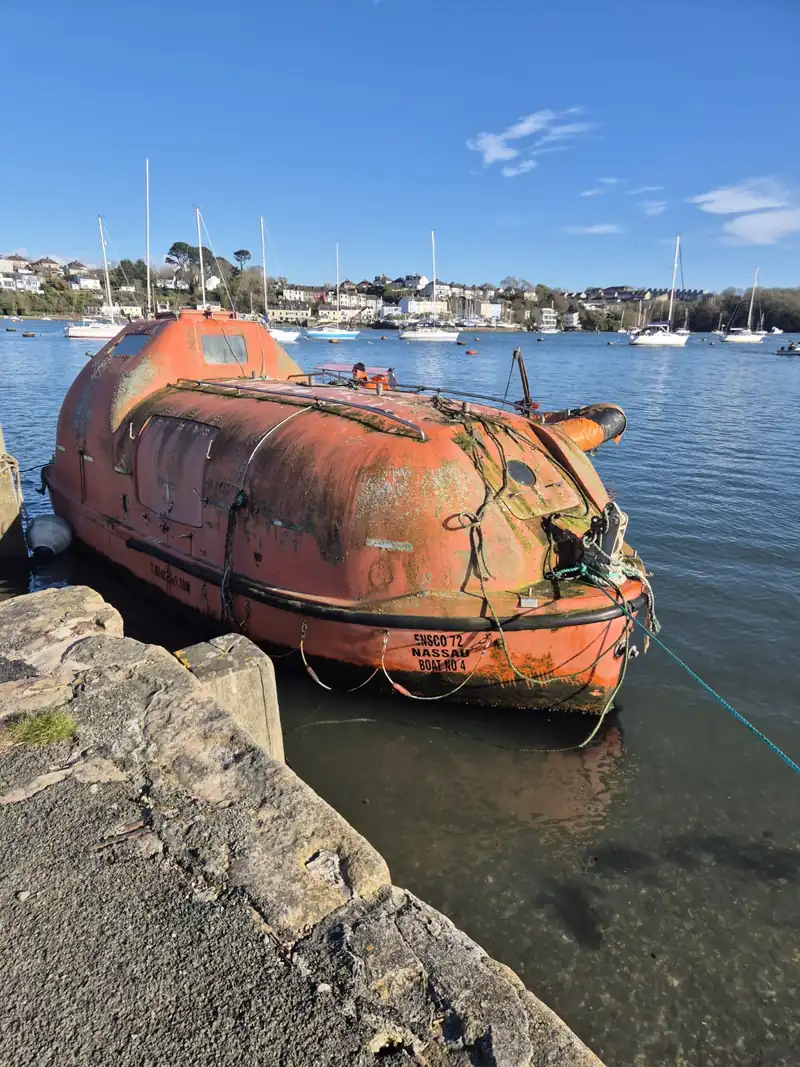
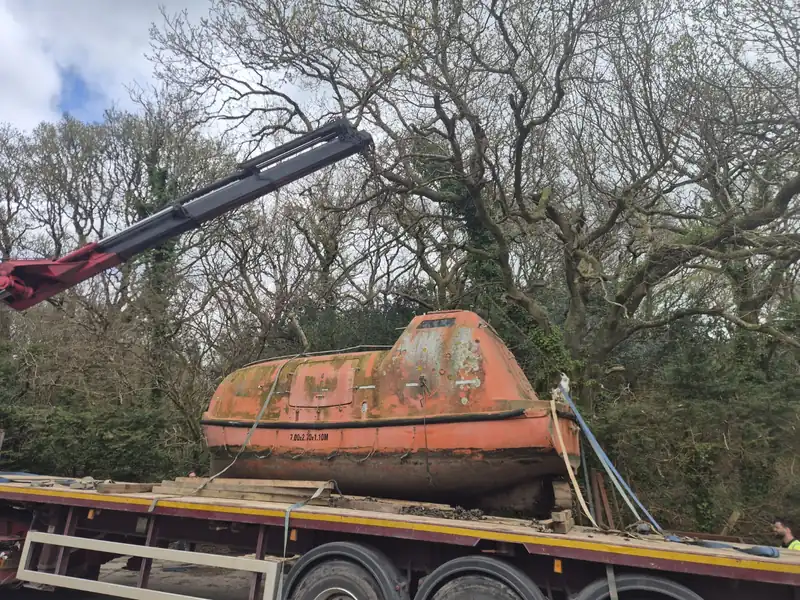
The boat was first moved from beneath the Tamar Bridge across to Saltash. Mussels and marine growth were cleaned from the hull, and the following day it was lifted from the water for the road journey west.
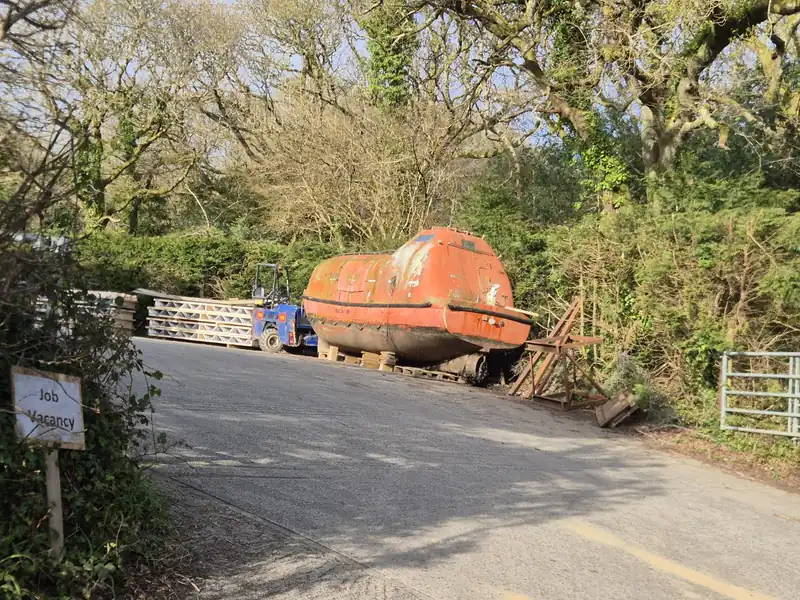
A brief stop at the truss yard
The lorry could bring it as far as the Roof Truss Company, who kindly let it sit on their forecourt for a couple of days while the final move was worked out. Fresh from the Tamar, it very quickly made its presence known by smell.
The final leg
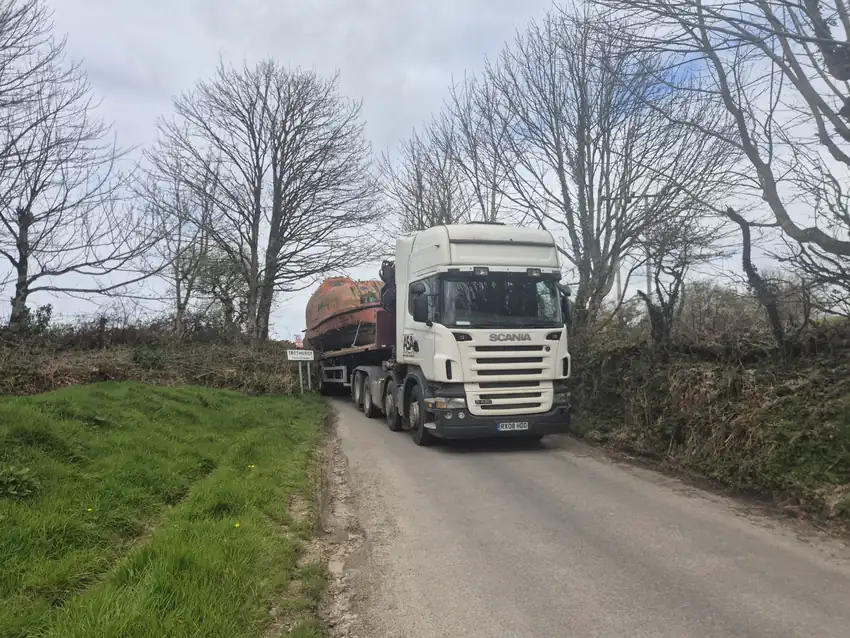
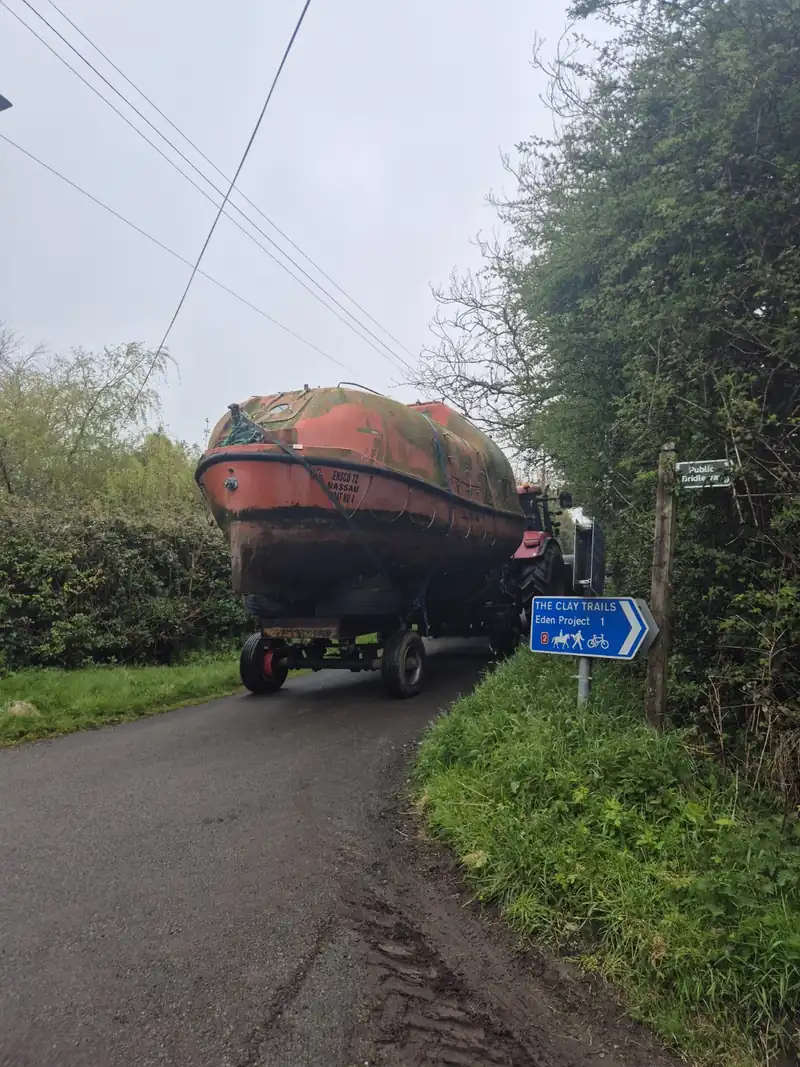
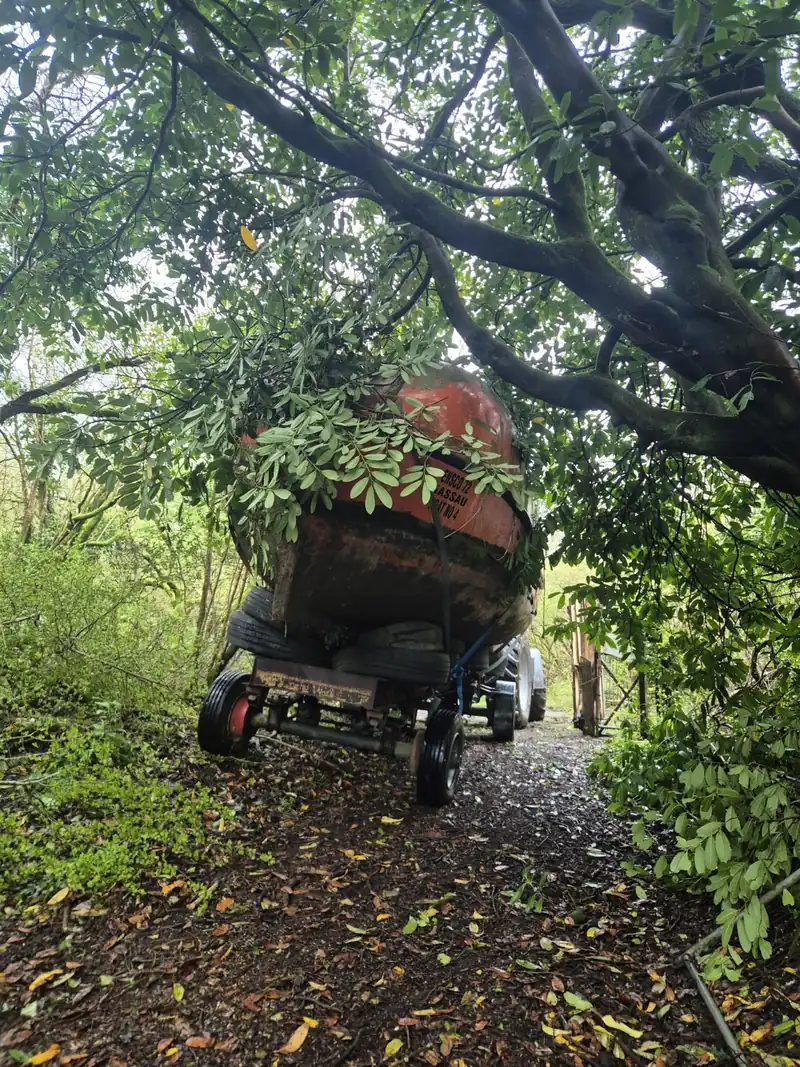
The Oliver family took over the awkward final operation. Ben Oliver coordinated the move, Lucy went ahead as the lead vehicle, Matthew drove the tractor and Darren cleared the route as the boat was brought through the narrow lanes towards Ennal’s Pool.
Beside the lake
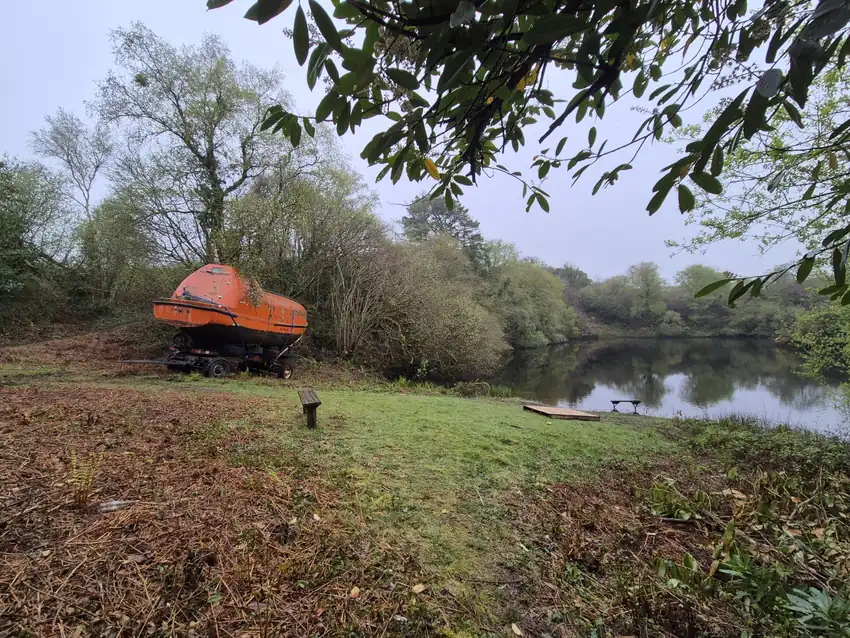
It eventually reached the clearing beside Ennal’s Pool, where it still sits on the same tractor trailer that carried it through the final part of the journey. The boat turned out to need more work underneath than first hoped, including fibreglass repairs, so restoration is waiting behind a few more pressing jobs around the site.
What the markings tell us
The hull markings include “ENSCO 72”, “NASSAU” and “BOAT NO 4”, together with a 48-person capacity marking. Those details give the boat a much clearer backstory.
ENSCO 72 was a self-elevating offshore drilling rig built in 1981 to a Hitachi K1025N design. Company records list its earlier names as Dan King, Ocean Benarmin and Ross Explorer before it became ENSCO 72. The rig was registered in the Bahamas with Nassau as its home port, matching the lettering still visible on the boat.
That does not yet tell us exactly when Boat No 4 was built or how long it served aboard the rig, but it strongly identifies the vessel it belonged to. ENSCO 72 worked internationally, including in the North Sea, before later changes of flag and ownership. The surviving markings turn what first looked like an anonymous enclosed lifeboat into a small piece of offshore history.
← Back to the journal